

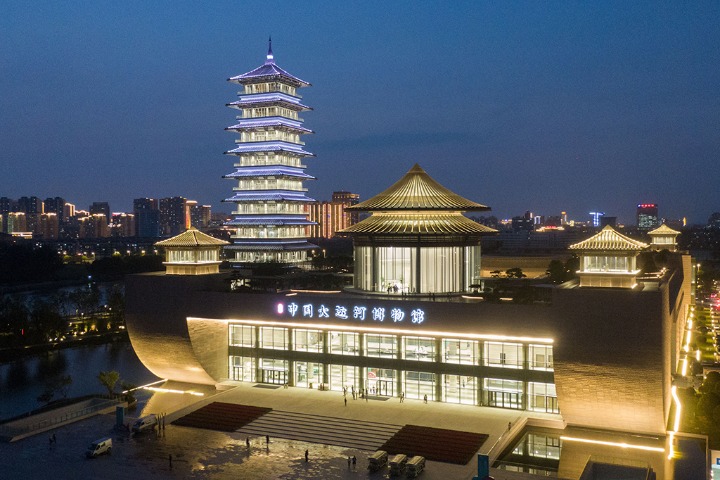
China Grand Canal Museum
Located in the Yunhe Sanwan Scenic Spot and covering 13.33 hectares (200 mu ), the China Grand Canal Museum is a modern and comprehensive facility dedicated to cultural relics preservation, academic research and exhibition, and leisure experiences.
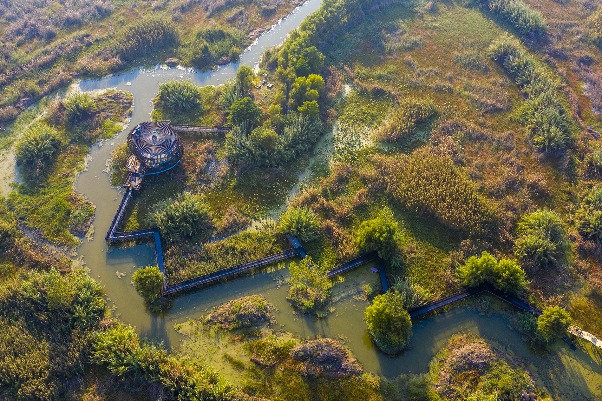
Sihong Hongze Lake Wetland Scenic Area, Jiangsu province
Covering a planned area of 5.2 square kilometers, Sihong Hongze Lake Wetland Scenic Area is located in the shoal area of northwestern Hongze Lake, the fourth largest freshwater lake in China.

Memorial Hall of the Victims in Nanjing Massacre by Japanese Invaders, Jiangsu province
The Memorial Hall for Victims of the Nanjing Massacre by Japanese Invaders was built on the site where the remains of the massacre victims were discovered.

Memorial Hall of the New Fourth Army's Jiangnan Command, Jiangsu province
As a revolutionary memorial, the Memorial Hall of the New Fourth Army's Jiangnan Command in Jiangsu province is dedicated to the protection and management of the command’s original site, as well as for collecting, researching, curating and promoting revolutionary artifacts and historical materials.

Shajiabang Revolutionary History Memorial Hall, Jiangsu province
During the Chinese People’s War of Resistance Against Japanese Aggression (1931-45), Shajiabang, located by the shore of Yangcheng Lake, became a guerrilla base linking Suzhou, Changshu, and Taicang.
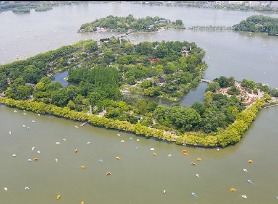
Xuanwu Lake, Nanjing
Xuanwu Lake, located in Nanjing’s Xuanwu district, is the largest city park in Jiangnan area (the southern regions of the Yangtze River) and is the largest lake in royal gardens.
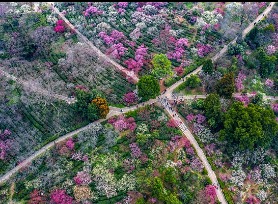
Nanjing Plum Blossom Mountain
Nanjing Plum Blossom Mountain, located in the Ming Xiaoling Mausoleum scenic area on the southern side of Purple Mountain, is among the country’s first batch of 5A scenic areas.
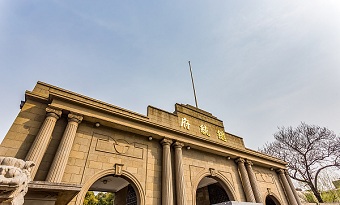
Presidential Palace
Located in Nanjing’s Xuanwu district, the Presidential Palace has a history of more than 600 years.
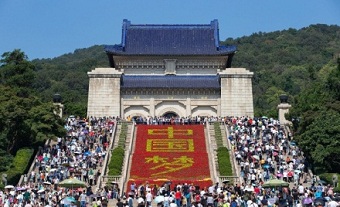
Zhongshan Mountain National Park
Zhongshan Mountain National Park was among the first batch of 5A scenic areas in China.
